Expanded metal is produced by partially slitting and stretching sheet metal row by row, creating a regular mesh of openings. At TECHNOTRON-METAL we manufacture it to measure in a wide range of shapes, dimensions and surface finishes. Thanks to its strength, durability and attractive appearance, it is widely used in architecture, industry and design.
Expanded Metal
A selection of expanded metal products from TECHNOTRON-METAL
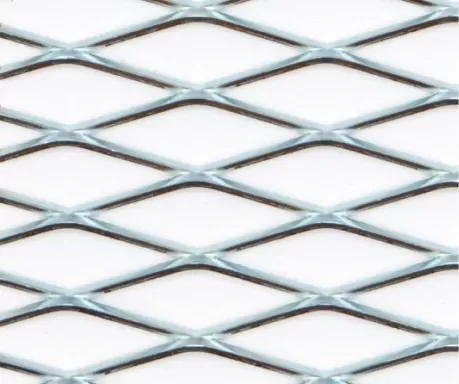
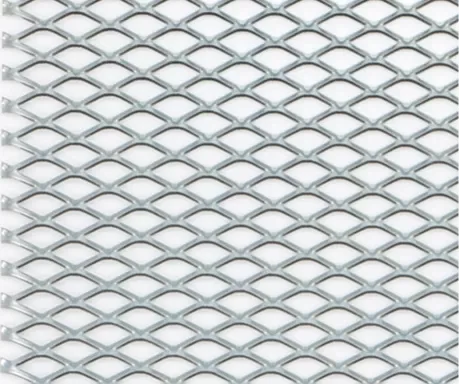
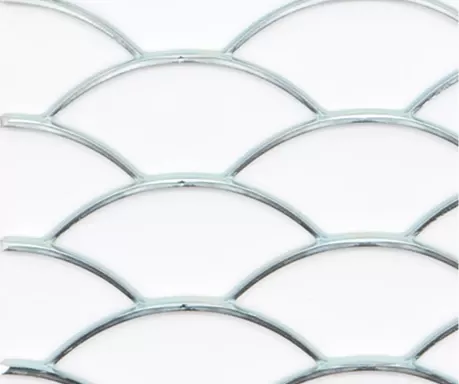

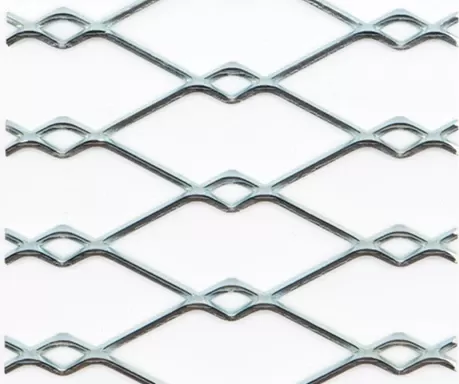
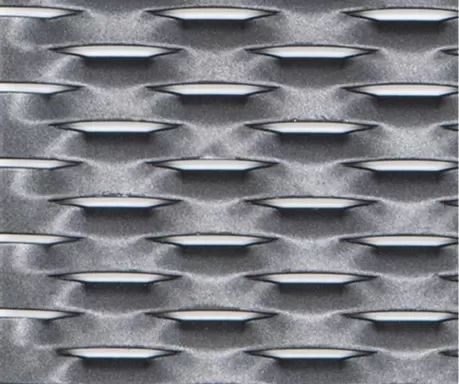
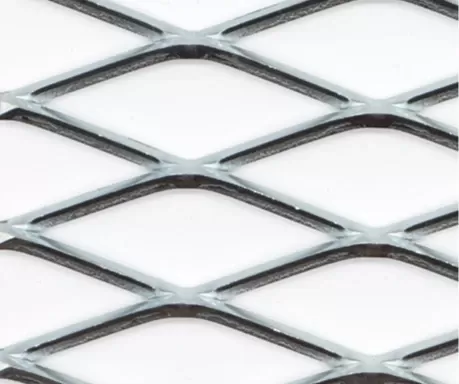
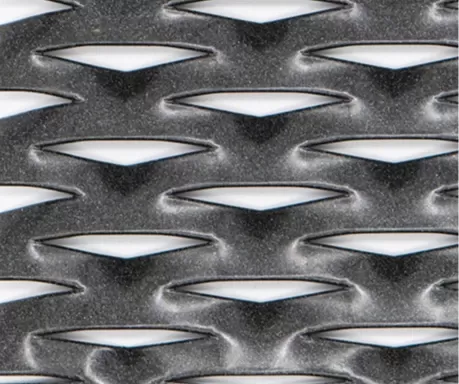
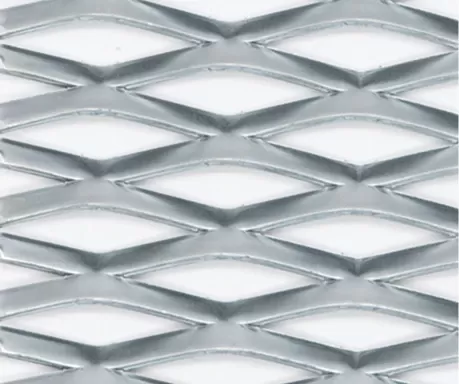
More products can be found in our e-shop.
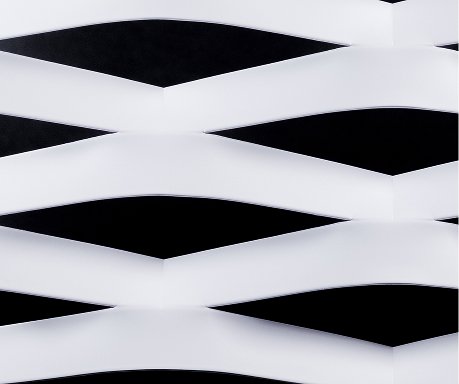
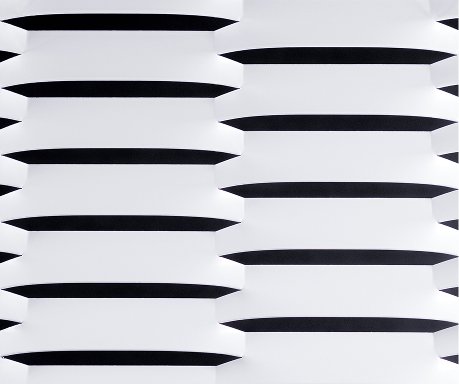
Expanded metal suitable for architecture
-
 ATLAS
ATLAS -
BOLDNESS
-
CREATIVITY
-
DESIGN
-
Grace
-
IDEA
-
LANGUAGE
-
PEOPLE
-
TRADITION
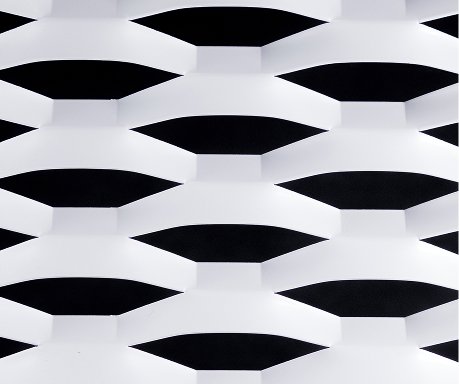
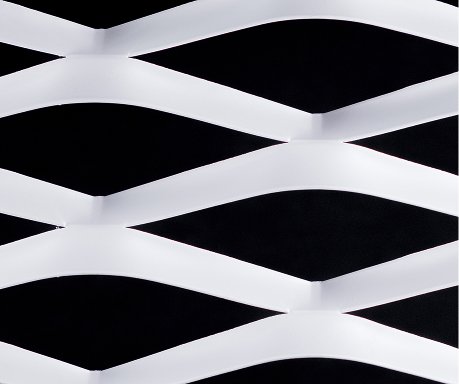
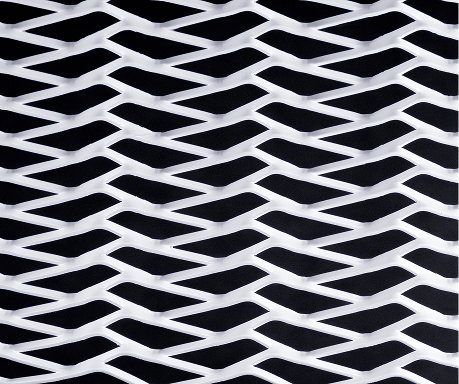
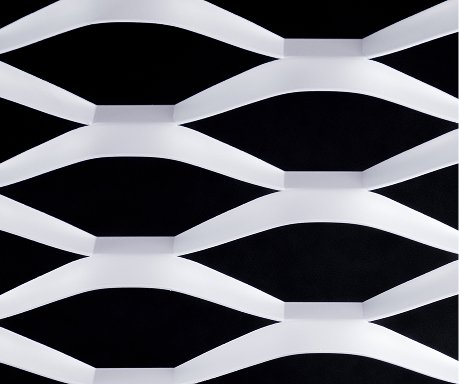
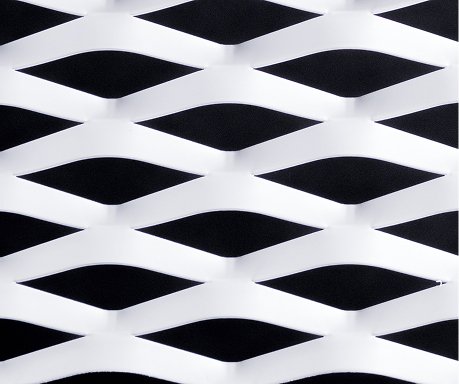
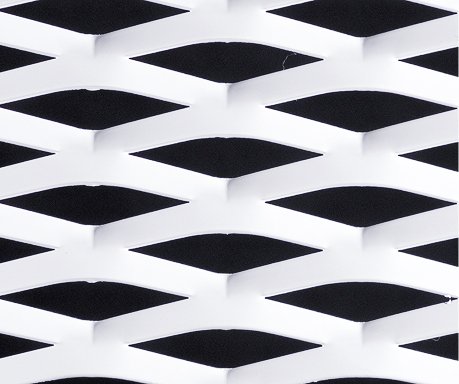
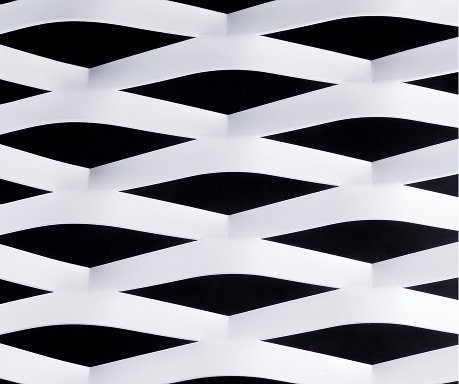
Materials
-
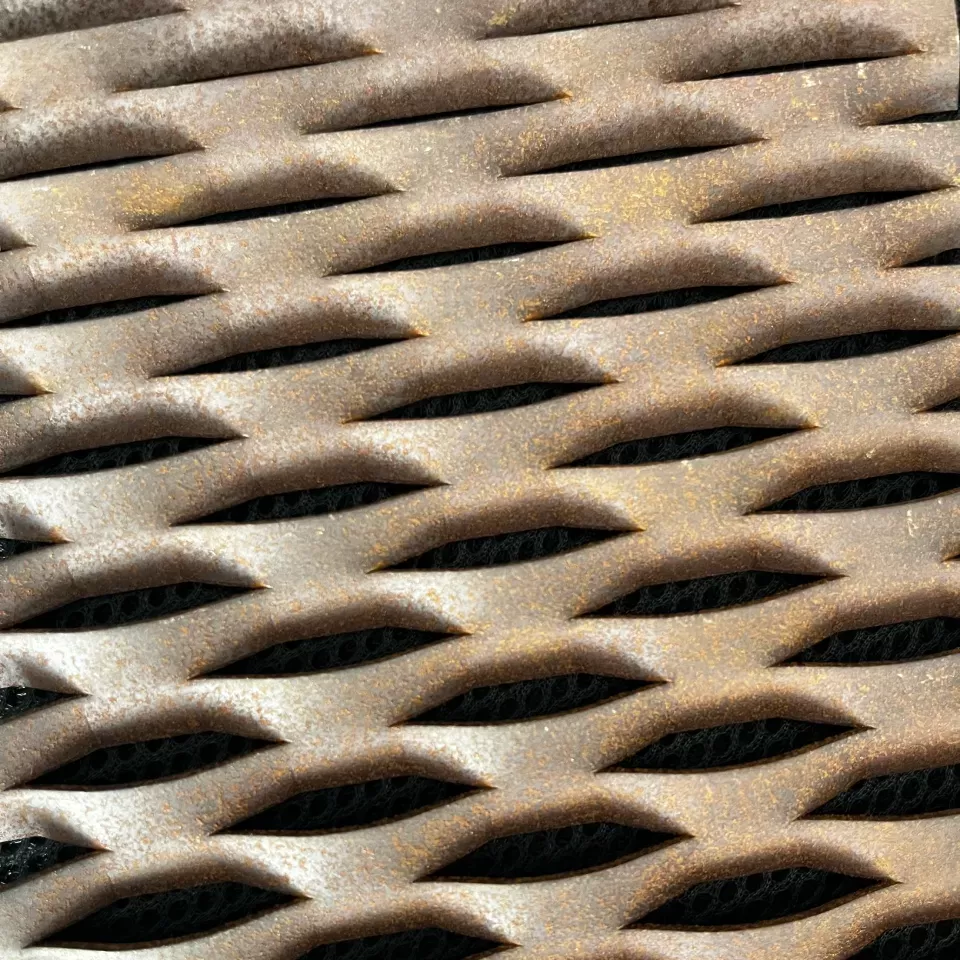
Corten® expanded metal Corten® expanded metal is made from a special steel that forms a stable patina on the surface – a corrosion layer that, unlike ordinary steel, seals the surface and prevents further oxidation. Thanks to its characteristic brown-orange colouring, it is used mainly in architecture and design. It is ideal for façades, screens, fence infills or artistic installations, where it combines long service life with a distinctive visual effect. It is not suitable for permanent contact with water or for embedding in concrete or burying in soil, because the conditions required for the formation of the patina are not met in this way and the service life would be the same as that of untreated steel.
-
Steel expanded metal Steel expanded metal is a strong and durable material suitable for technical and structural applications. Thanks to its high mechanical resistance, it is used in industry, engineering and construction, for example for walkways, staircases, protective covers or infill panels. It can also be used on façades, especially in locations with a higher risk of vandalism. It is suitable wherever robustness is the priority and, when combined with a hot-dip galvanised surface finish, also offers long service life.
-
Expanded metal from galvanised sheet Expanded metal made from galvanised sheet retains the mechanical properties of steel expanded metal – it is strong and durable – and already provides corrosion protection through the zinc layer across the surface, which is partially transferred during processing to the cut edges. This expanded metal is also suitable for further coating, both by wet painting and by powder coating. A disadvantage is that it is not suitable for welding into further structures.
-
Aluminum expanded metal Aluminium expanded metal is lightweight, easy to process and has a long service life. It is characterised by a clean appearance and high degree of versatility. It is suitable for façades, suspended ceilings, interior elements, architectural features and architectural installations. Thanks to its low weight, it is ideal wherever structural load must be minimised. It can be used in its raw state, with an anodised oxide surface finish (anodised aluminium) in various shades, or with a powder-coated finish in any colour.
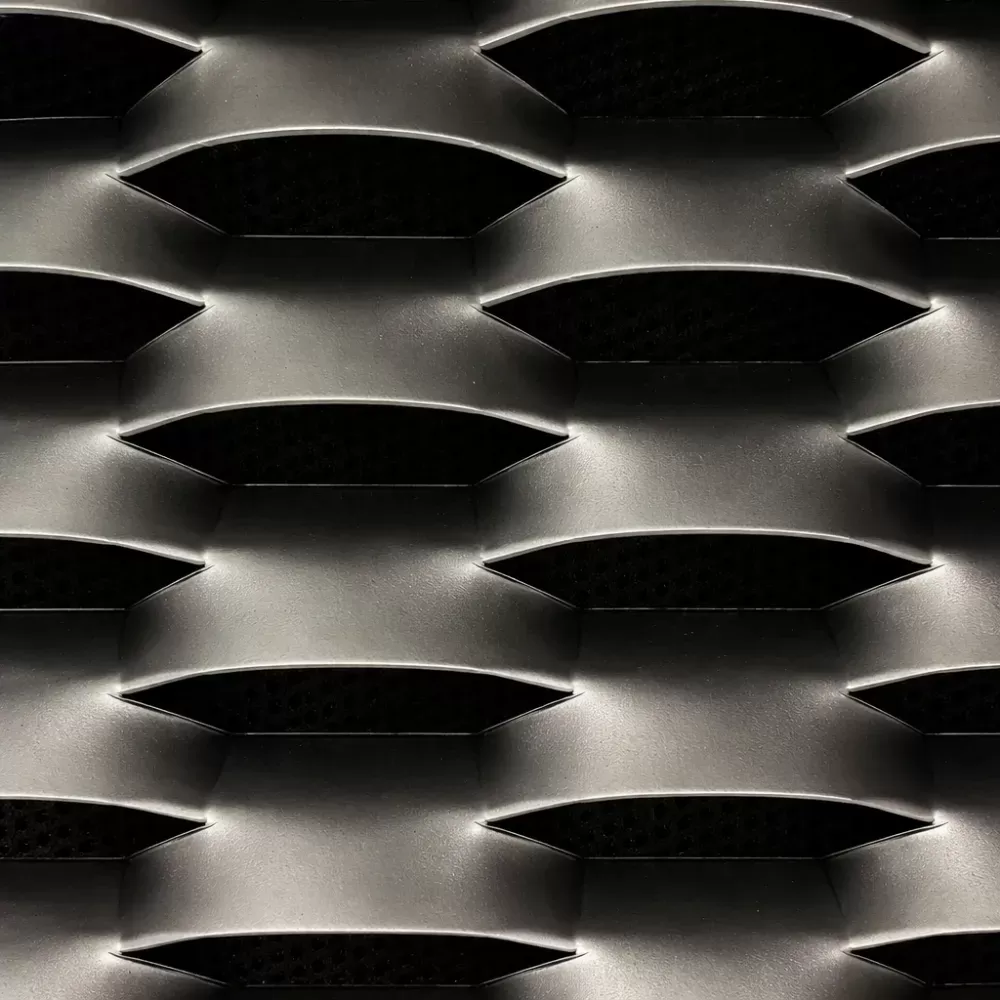
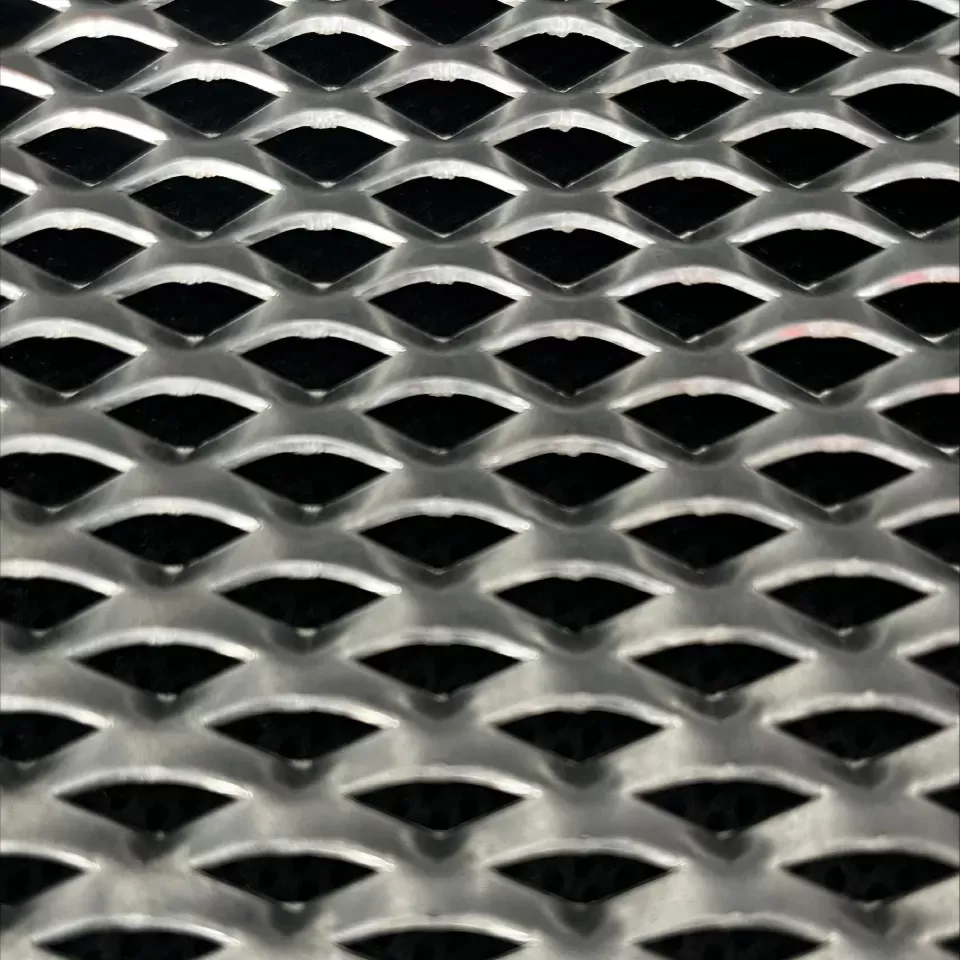
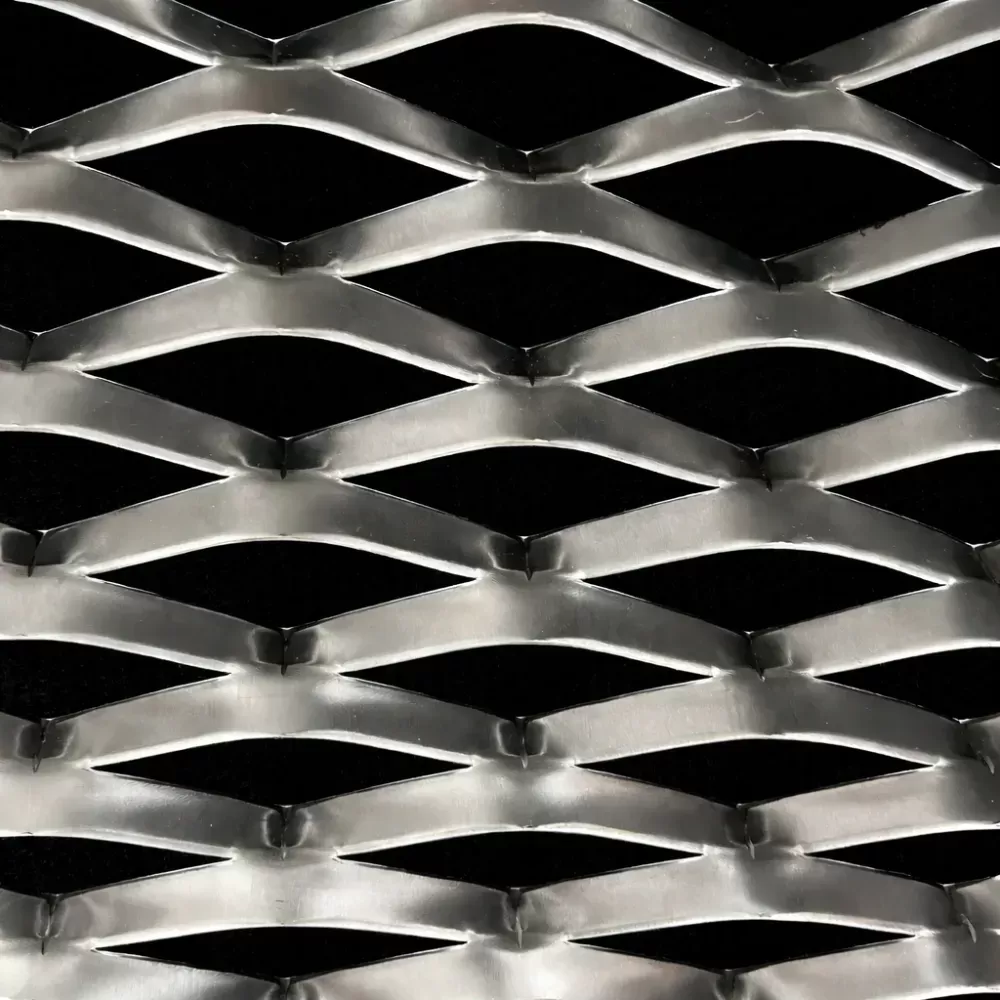
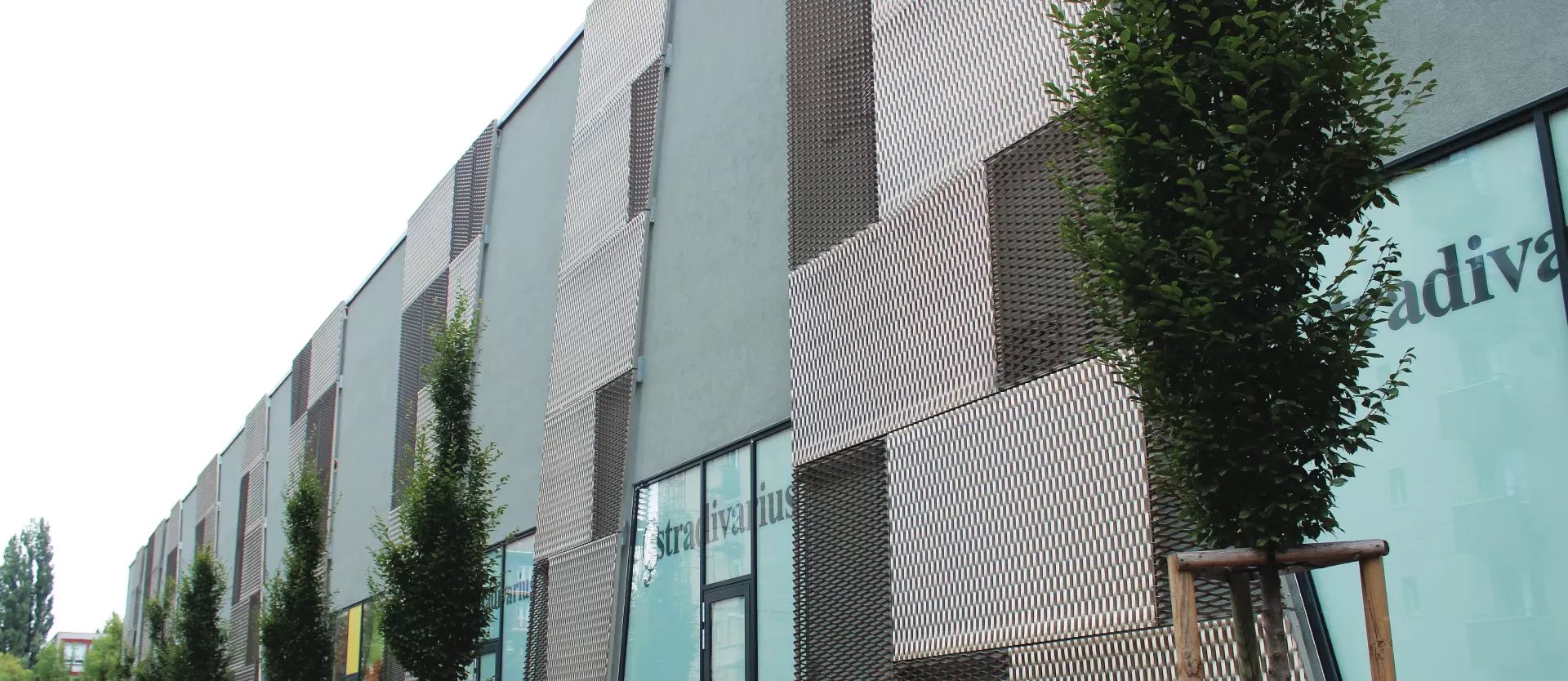
Possible applicationsDesign elements
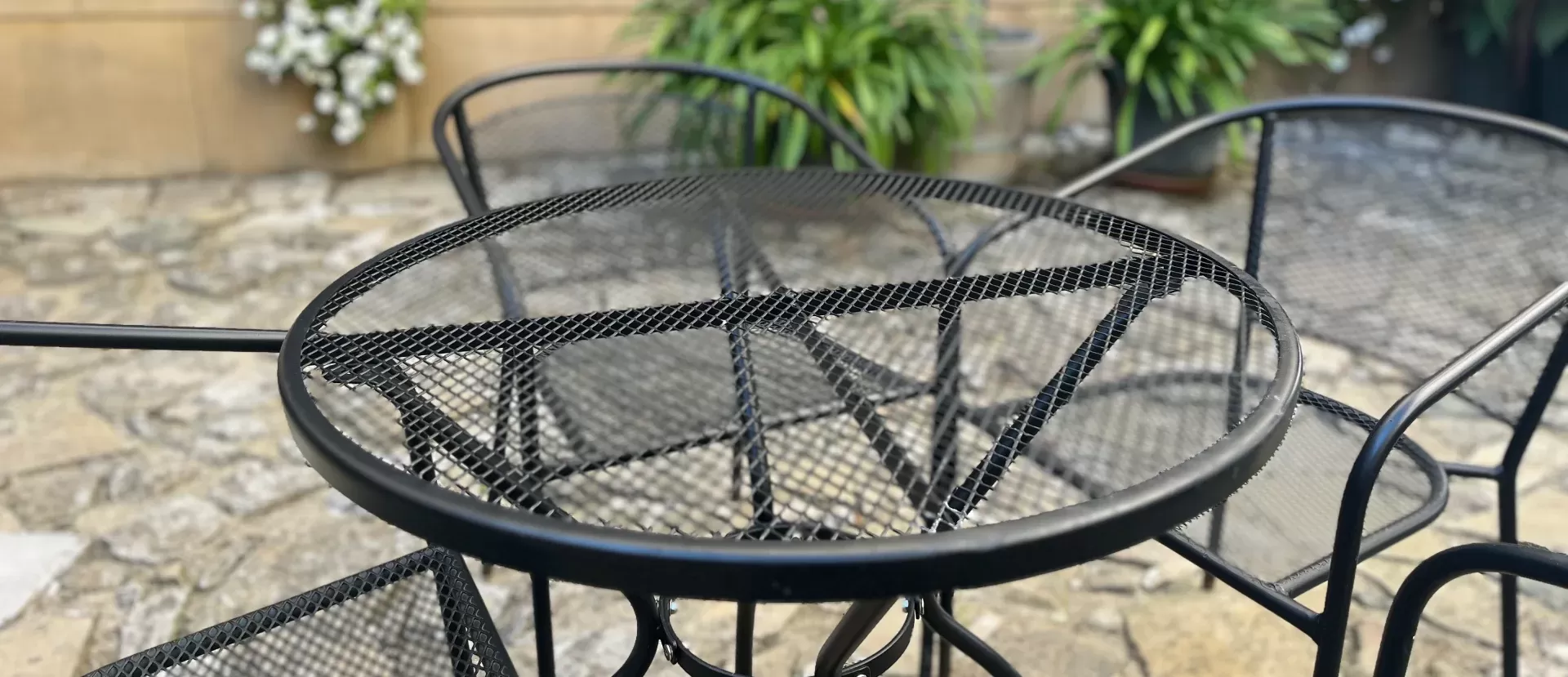
Possible applicationsFurniture
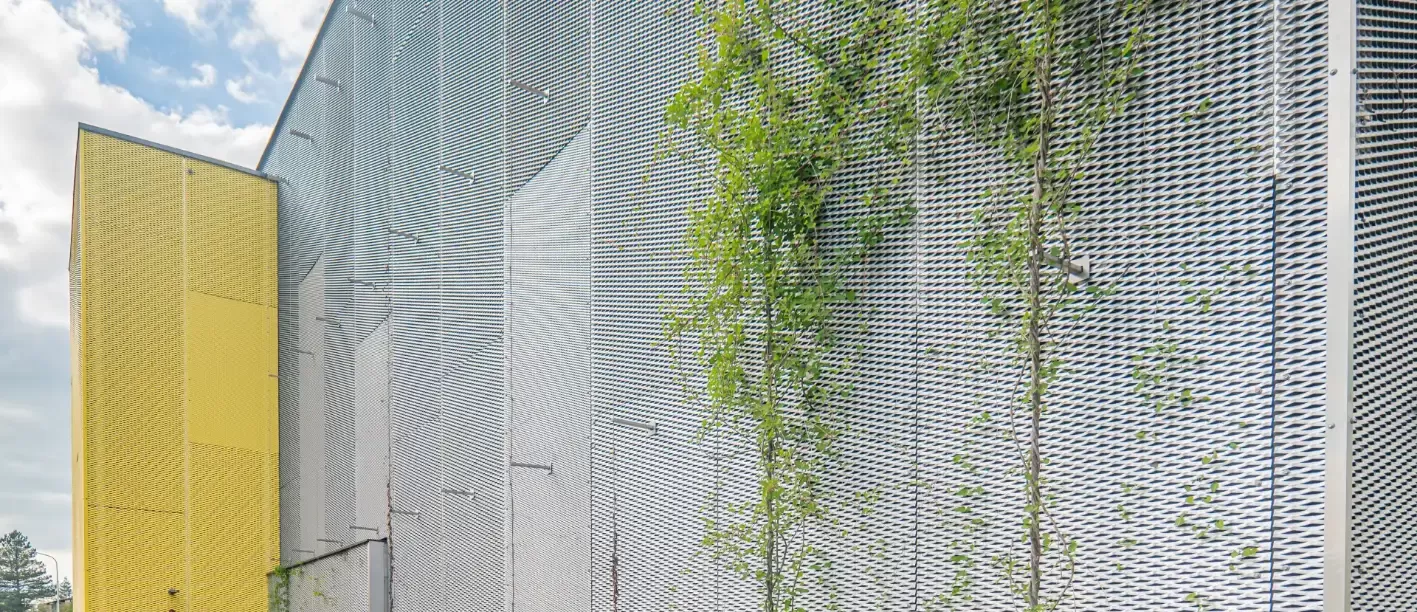
Possible applicationsCar parks
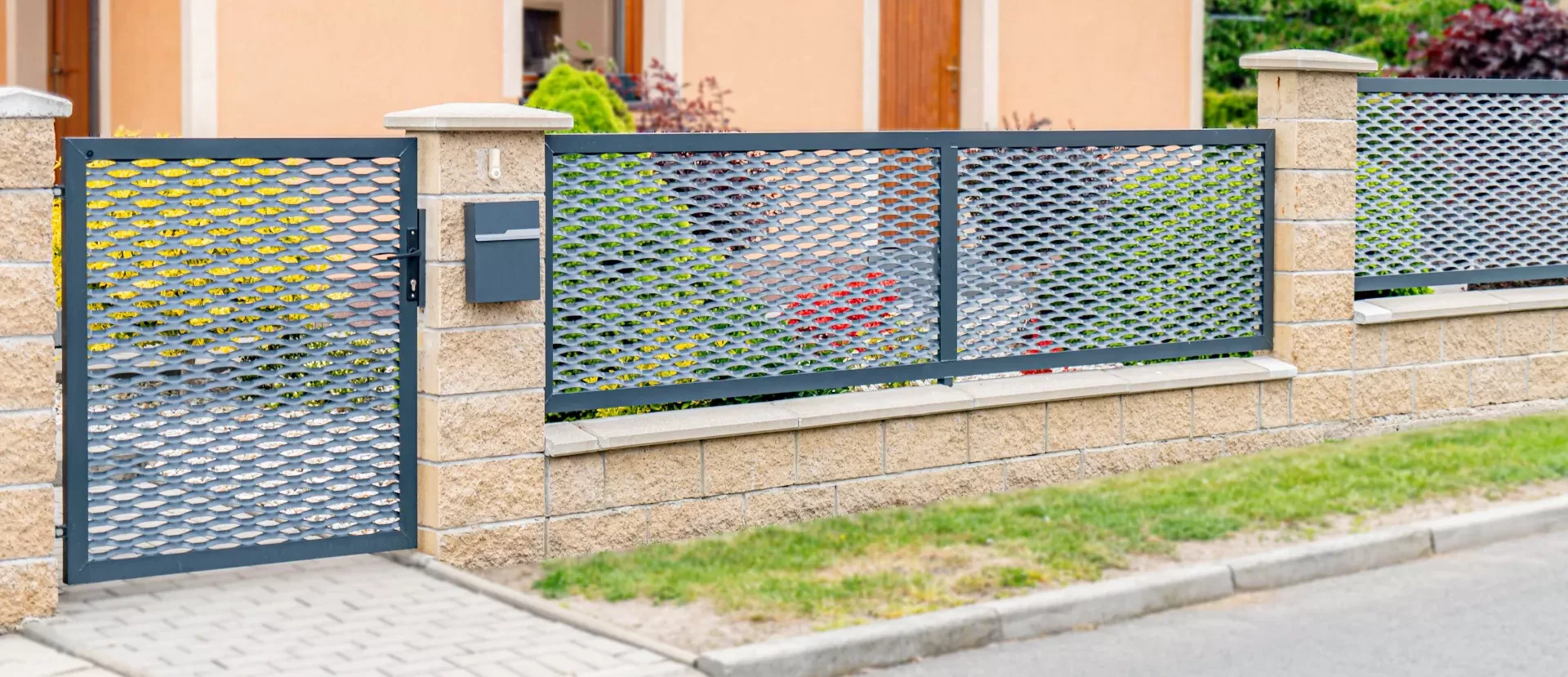
Possible applicationsFences
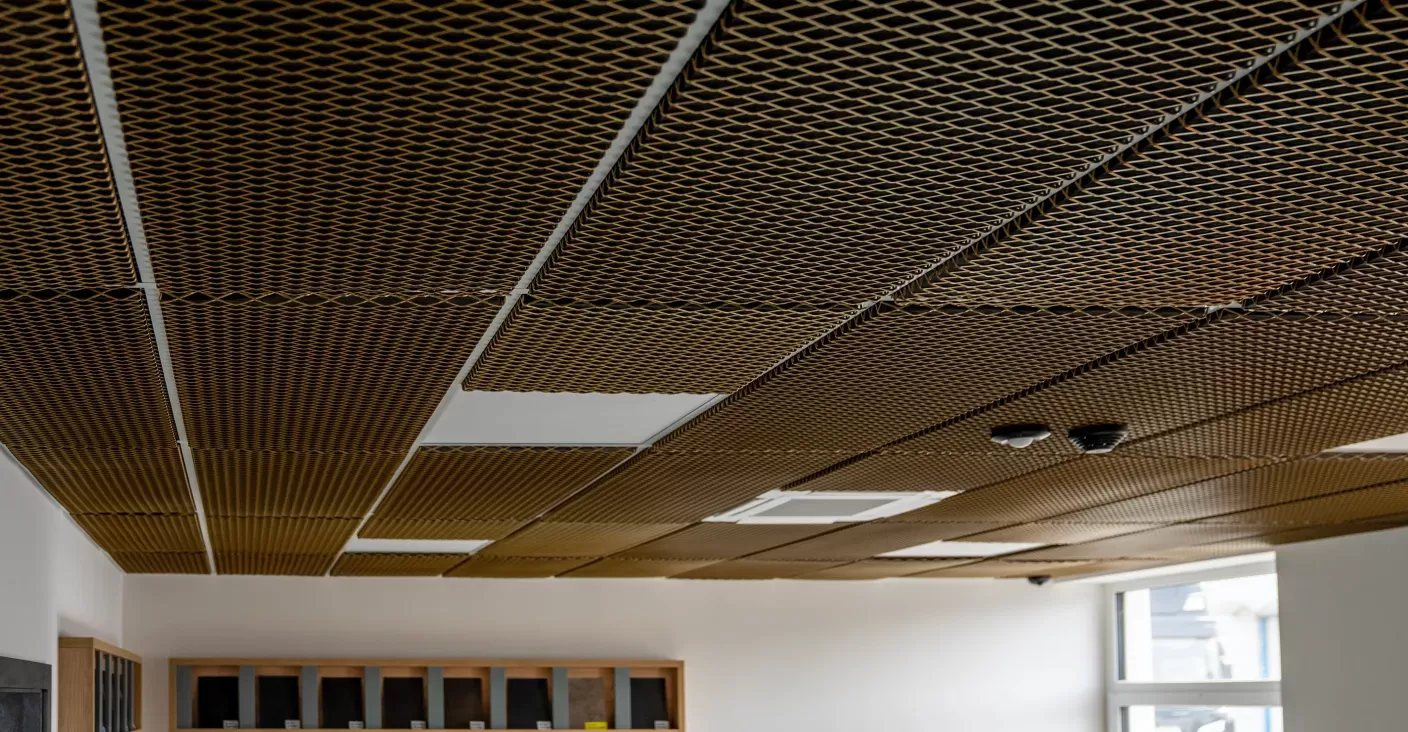
Possible applicationsSuspended ceilings
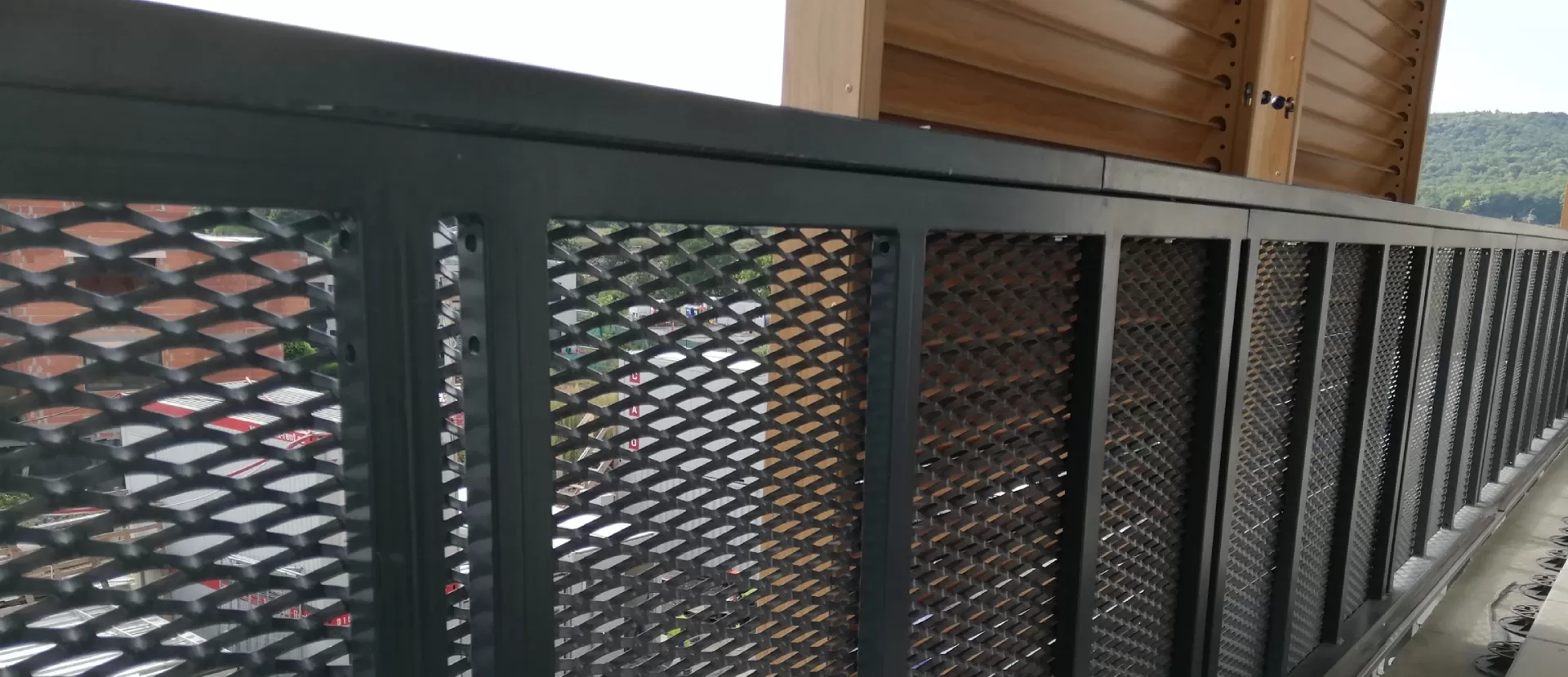
Possible applicationsBalustrade infills
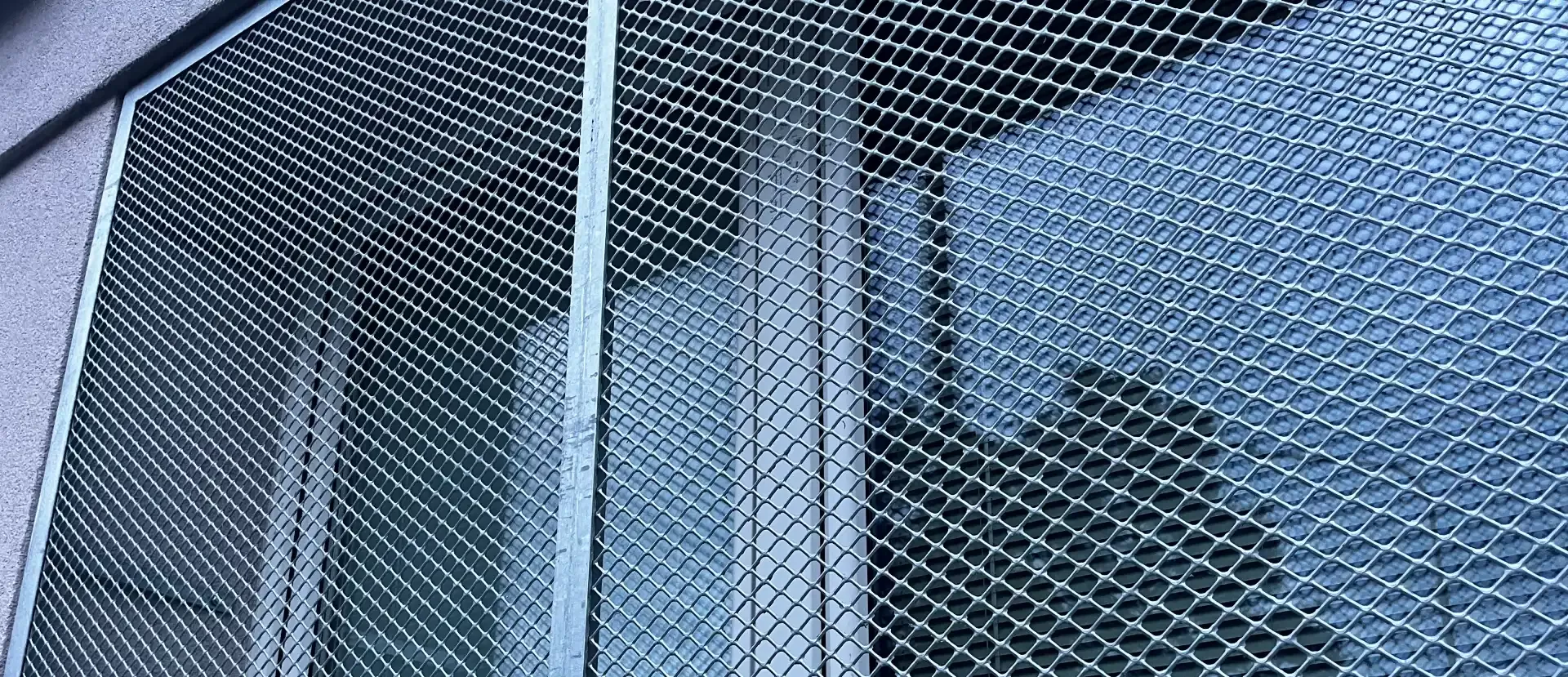
Possible applicationsScreening
General technical information
-
Manufacturing principle
Manufacturing principle
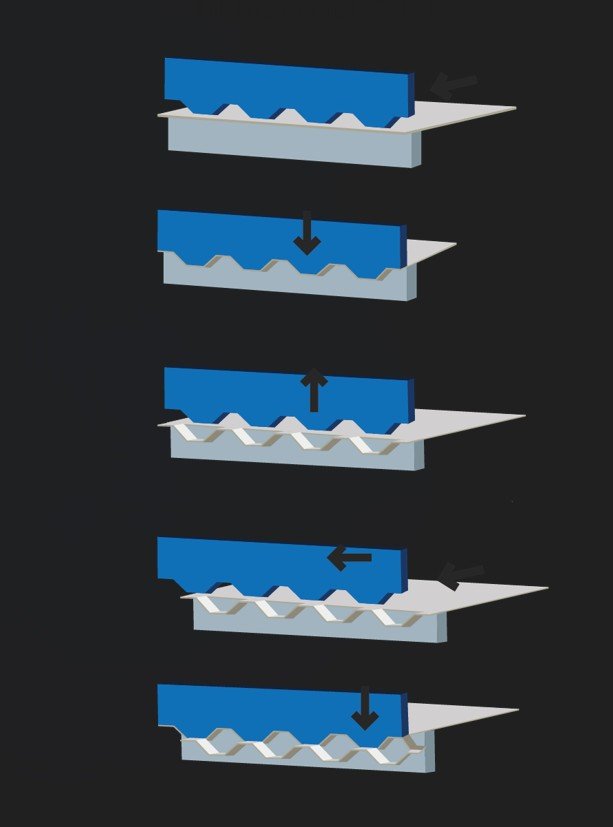
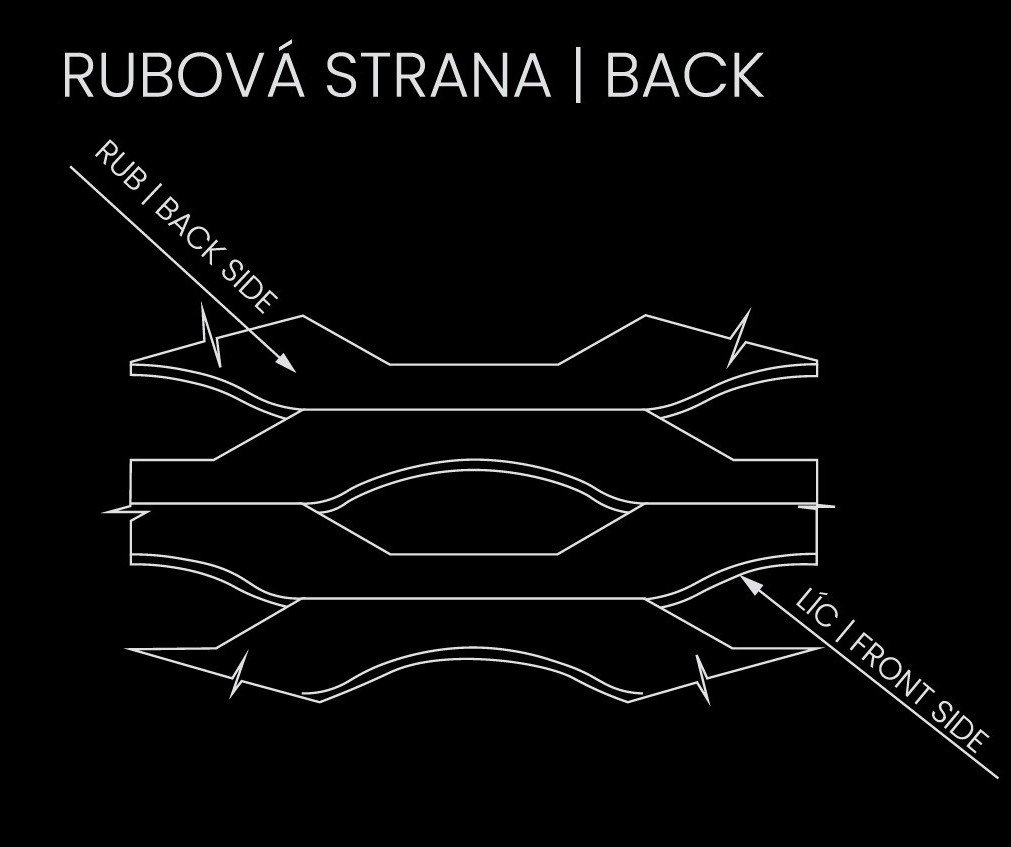
During the production of expanded metal, the input material is only slit along a straight line, so no production waste is generated. Only at the end of the input material (sheet or coil) does an unprocessed section remain, where the material is clamped and handled. The cut is made perpendicular to the input material and, after each step where the upper blade returns to its upper position, the material is advanced by the feed, also called the bridge. At the same time, the blade moves sideways by half the mesh width so that, in the next step, it creates an alternating row of mesh (some technologies move the material sideways relative to the blade).
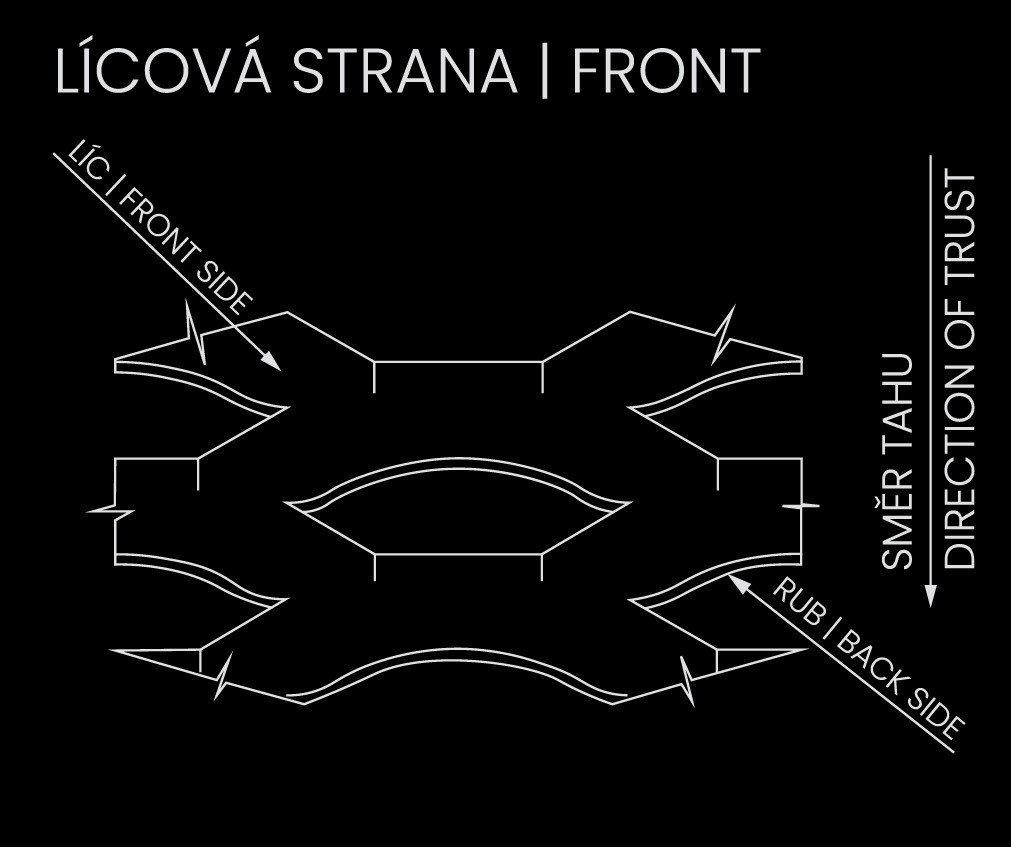
The direction in which the upper blade pulls the mesh and the direction of the feed combine to form the direction of expansion. This is essentially the direction in which the material passes through the cutting press. It also defines the side of the first and last cut.
Terminology
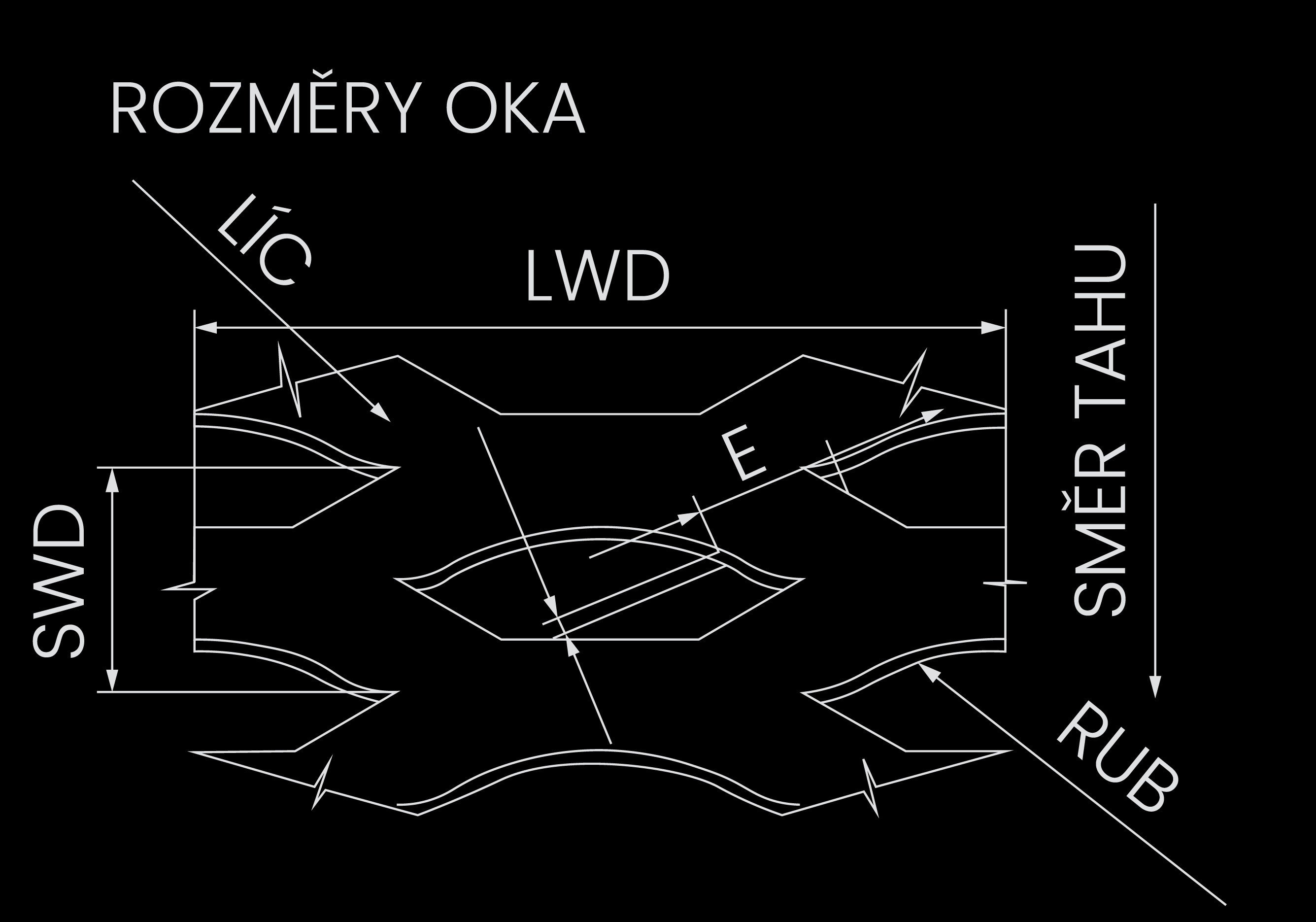
LWD (Long Way Diagonal) – mesh width
SWD (Short Way Diagonal) – mesh length
E feed, bridge
S sheet thickness
Example of expanded metal designation:
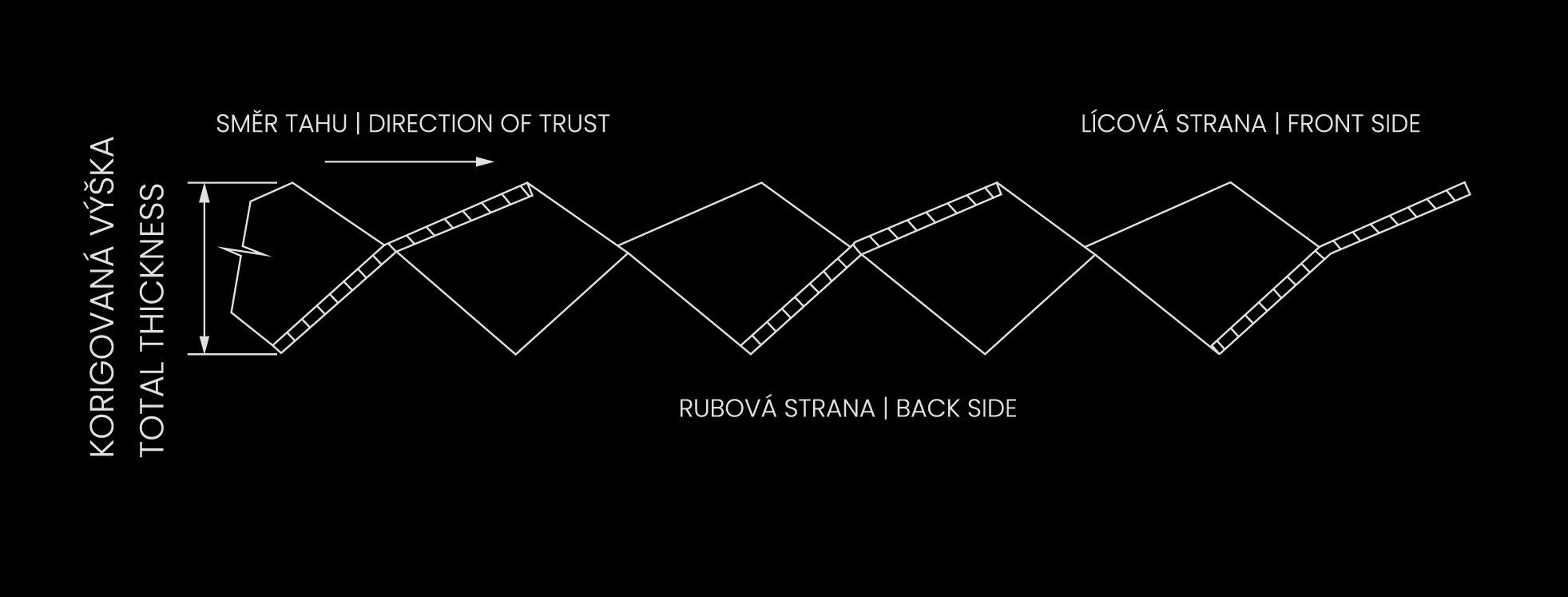
TH LWD x SWD x E x S [mm] E.g. TH 200x56x20x2The letter H, here meaning hexagonal, indicates the mesh shape. However, because there are many shapes and the code letters differ between languages, a descriptive name or trade name is recommended. A characteristic feature of expanded metal production is that the material is elongated during manufacturing. The two feeds E are stretched to the SWD dimension. From this relationship, it is possible to calculate material consumption and the specific weight of the expanded metal with reasonable accuracy. Because the expanded metal is slit perpendicular to the sheet and advanced forward, it effectively creates small steps. When these are placed on a flat surface, the actual thickness of the expanded metal can be measured, referred to as the “corrected height”.
-
Corrected height
Corrected height
The corrected height of expanded metal indicates its actual overall thickness. Unlike the original sheet thickness, the corrected height also reflects the spatial arrangement of the mesh and is therefore always greater than the thickness of the input sheet. This value determines how much space the expanded metal occupies within a structure and therefore facilitates the design of façades, infills and technical applications. Corrected height is not determined for rolled expanded metal, where subsequent forming (rolling) compresses the expanded metal back into a flat material with constant thickness, which may or may not correspond to the thickness of the original sheet.
-
Permeability
Permeability
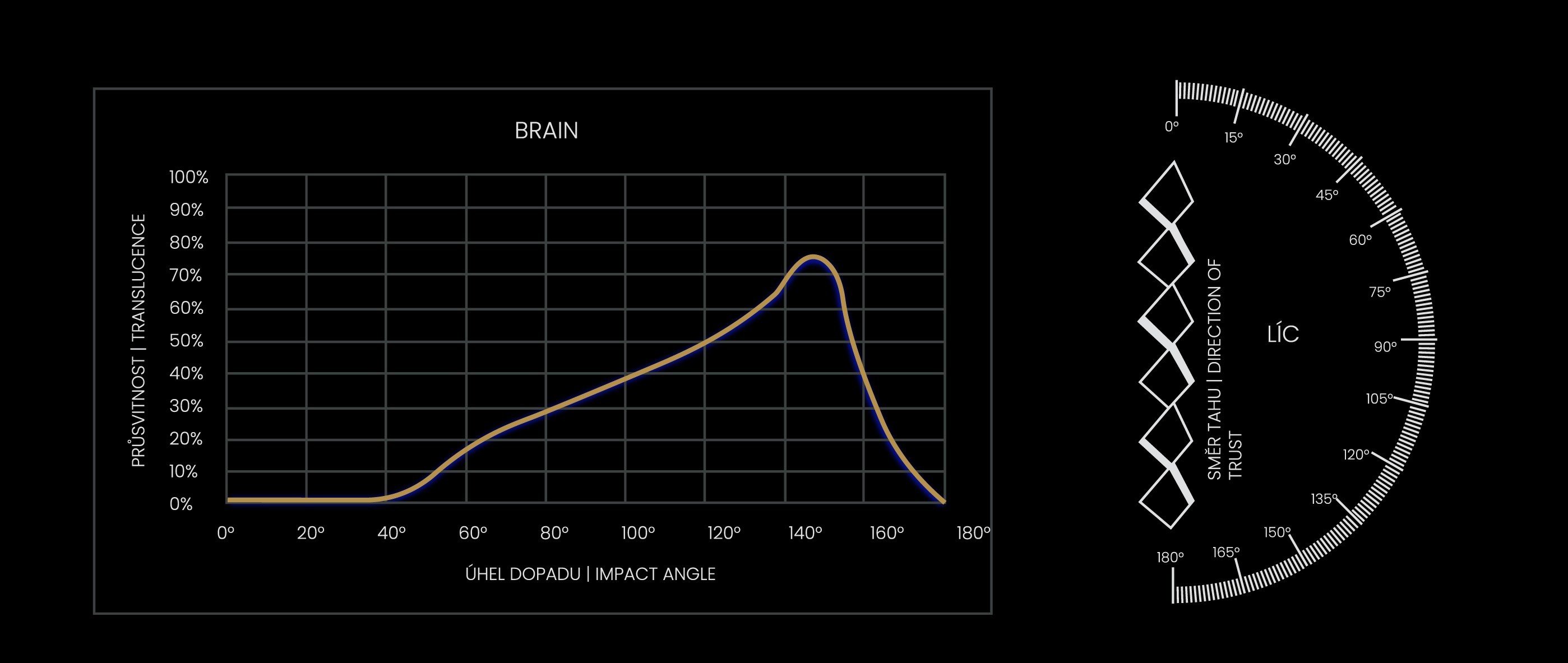
Permeability indicates what proportion of the surface area consists of openings, allowing the passage of light, air or sound. It is expressed as a percentage and varies according to the size and shape of the mesh. In simple terms, the larger the feed (bridge), the lower the permeability. Basic permeability is measured perpendicular to the surface of the expanded metal, but its value also depends on the viewing angle. For this reason, the characteristics of expanded metal usually include a graph of permeability based on the inclination of the material. This makes it possible, for example, to determine the degree of shading when sunlight falls at different angles in summer and winter. This parameter therefore influences not only the appearance and design of expanded metal, but also its functionality, for example when used on façades, shading panels, balustrades or technical filters.
-
Tolerances
Tolerances
Tolerances express the permissible deviations from the declared dimensions, such as mesh size, sheet thickness, or panel width and length. These deviations are defined by manufacturing standards and technical specifications and ensure that the material meets the required quality even in serial production. This parameter is important when fitting expanded metal precisely into structures, where small dimensional differences must be taken into account without compromising the functionality or safety of the application.
-
Contours
Contours
Contours determine how the expanded metal will appear along its edges. Because the width of expanded metal is not always a multiple of the LWD mesh size, the same panel format could otherwise appear different at the edges. It may be produced with full meshes on the left side and open meshes on the right edge, or it may be produced centred (symmetrically), with open meshes on both sides, for example. To clearly define the required appearance of the edges of the expanded metal, various contour types are defined. The use and specification of contours is particularly important for larger façade areas composed of multiple expanded metal panels, where it ensures a continuous visual transition between adjacent panels.
-
Bendability
Bendability
Bendability describes the ability of expanded metal to adapt during bending and forming. Thanks to its characteristic mesh structure, the material is flexible and can easily be adapted to the required curvature or structural detail. The material therefore offers a combination of strength and formability without loss of quality. In the direction of expansion (the SWD direction), expanded metal can be formed without pre-rolling, depending on the material thickness. In the LWD direction, where the material is structurally stronger due to its spatial structure, it can be rolled between rollers to the required radius.
-
Slip resistance
Slip resistance
Slip resistance simply indicates how the material behaves when used as a walking surface. This property is therefore particularly important for stairs and walkable grating used on walkways, bridges, galleries and similar structures. This value is determined by a state testing laboratory and depends both on the surface treatment of the expanded metal and, especially, on the mesh shape, the walking side (reverse/face), and any special anti-slip feature integrated into the mesh shape during production.
-
Rigidity
Rigidity
Rigidity describes how resistant expanded metal is to loads and deformation. Rigidity is influenced by the thickness of the sheet used, the size and shape of the mesh and way it is fixed within the structure. This parameter is particularly important for applications where higher forces or frequent use are expected, so the customer can be sure that the material will withstand the load and maintain its stability.